
Blog
Vaping Explained What It Is, How It Works, Risks, Myths & Smarter Choices

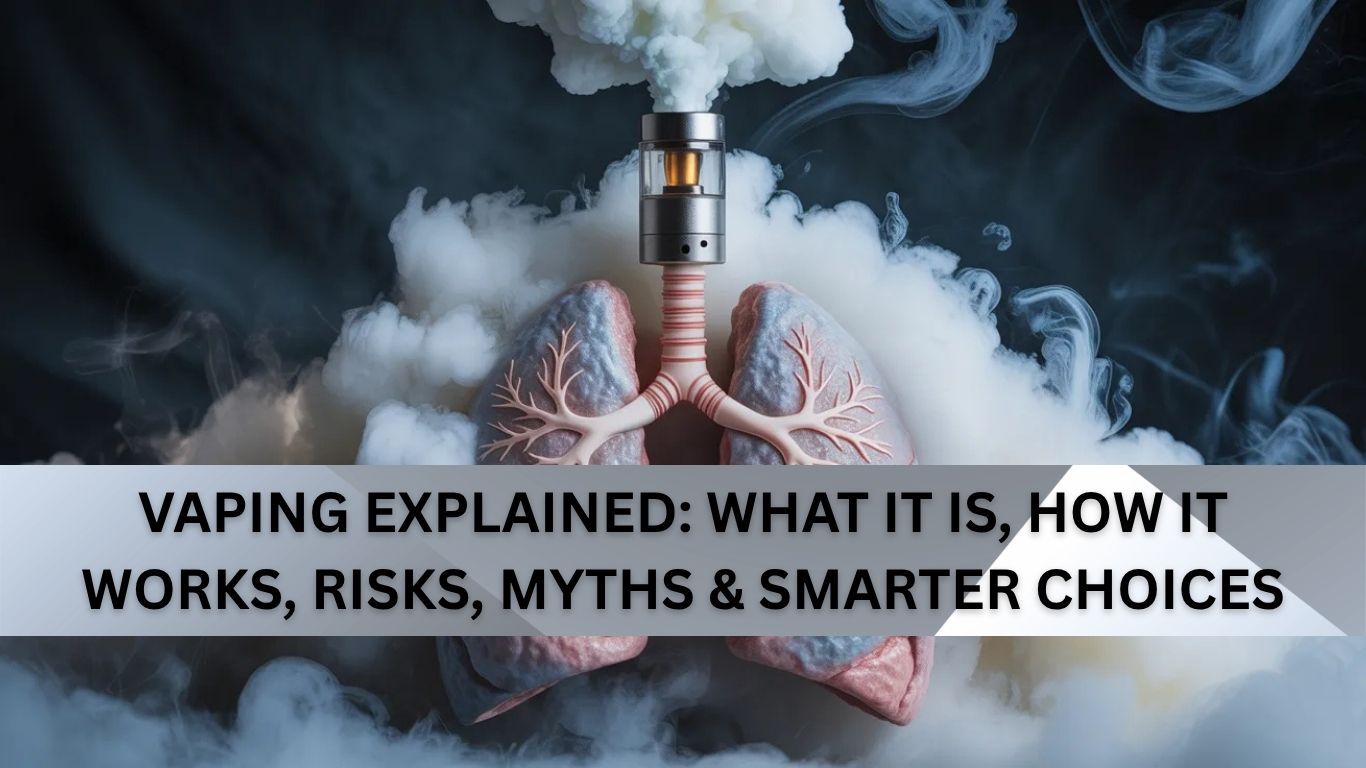
Vaping is the act of inhaling aerosol produced by heating a liquid (e-juice) that usually contains nicotine, flavorings, and chemicals. It is generally less harmful than smoking cigarettes, but it is not safe, can damage lungs, and is highly addictive especially for young users.
Why Vaping Is More Complex Than You Think
Vaping sits in a confusing space. Some people see it as a safer alternative to smoking. Others think it’s just as dangerous. The truth lies in between.
- Vaping avoids burning tobacco, which reduces many toxic chemicals.
- But it still exposes your body to nicotine and harmful substances.
- Long-term effects are still being studied.
The real problem? Most articles oversimplify vaping. This guide breaks it down clearly so you can make informed decisions, not assumptions.
What Is Vaping?
At its core, vaping is simple:
A device heats a liquid → turns it into aerosol → you inhale it.
How it works step-by-step:
- Battery powers the device
- Coil heats up
- E-liquid turns into aerosol
- Aerosol enters lungs
Unlike smoking, there is no combustion, which means fewer toxic byproducts.
Vapor vs Smoke
- Smoke = burned material + thousands of toxic chemicals
- Vapor = heated liquid + fewer chemicals
But here’s the key point:
It’s not harmless water vapor. It’s a chemical aerosol.
What Happens Inside Your Lungs
When you inhale vapor:
- Ultrafine particles travel deep into lung tissue
- Chemicals interact with lung cells
- Inflammation can begin almost immediately
What’s Inside a Vape?
3.1 Core Ingredients
Most vape liquids contain:
- Nicotine (addictive substance)
- Propylene Glycol (PG) (carries flavor)
- Vegetable Glycerin (VG) (creates vapor)
- Flavorings
3.2 Hidden Risks Most People Miss
When heated, these ingredients can:
- Break down into toxic compounds
- Release heavy metals from coils
- Produce harmful carbonyls (linked to disease)
3.3 Vape vs Cigarette vs Clean Air
| Substance | Vape | Cigarette | Fresh Air |
| Nicotine | Yes | Yes | No |
| Toxic chemicals | Moderate | Very high | None |
| Combustion | No | Yes | No |
Even though vaping has fewer chemicals than cigarettes, it still exposes users to harmful substances.
Types of Vape Devices: Evolution & User Behavior
Common Device Types
- Disposable vapes (easy, high nicotine)
- Pod systems (compact, popular)
- Vape pens (basic reusable)
- Mods (high power, customizable)
Why Device Type Matters
- Higher power = more vapor = more chemical exposure
- Custom devices can increase risk unintentionally
Behavioral Insight (Unique)
- Beginners prefer simplicity → disposables
- Regular users seek stronger hits → mods
- Addiction often increases with device upgrades
Inhalation Styles Explained (MTL vs DL)
Mouth-to-Lung (MTL)
- Similar to smoking
- Slower nicotine intake
Direct-to-Lung (DL)
- Deep inhale
- Higher vapor volume
Why It Matters
DL users may:
- Inhale more chemicals
- Absorb more nicotine quickly
- Increase long-term exposure without realizing it
Is Vaping Safer Than Smoking?
What Science Says
- Vaping is less harmful than smoking
- But not risk-free
Why Smoking Is Worse
Cigarettes:
- Burn tobacco
- Produce 7,000+ chemicals
- Include tar and carbon monoxide
Vaping avoids combustion, which reduces toxic exposure.
But Here’s the Reality
- Vaping still damages lungs
- Still affects heart health
- Still causes addiction
Risk Spectrum (Clear Framework)
- Worst: Smoking
- Less harmful: Vaping
- Better: Nicotine replacement
- Best: No nicotine
Health Effects of Vaping
7.1 Short-Term Effects
- Coughing
- Dry mouth
- Throat irritation
- Shortness of breath
7.2 Long-Term Risks (Emerging Evidence)
Studies link vaping to:
- Chronic lung disease (COPD)
- High blood pressure
- Respiratory symptoms
7.3 Youth-Specific Risks
- Brain development damage
- Higher addiction risk
- Increased chance of future smoking
Nicotine & Addiction: The Real Problem
Nicotine is the core issue.
How It Works
- Triggers dopamine (reward chemical)
- Creates dependence quickly
- Builds tolerance over time
Why Vaping Can Be More Addictive
- Easier to use anytime
- Higher nicotine concentrations
- Nicotine salts absorb faster
Psychological Addiction (Unique Insight)
It’s not just chemical:
- Habit loops (stress → vape → relief)
- Social triggers
- Constant accessibility
Common Myths About Vaping
Myth 1: “It’s just water vapor”
False. It contains chemicals and particles.
Myth 2: “Vaping is harmless”
False. It still affects lungs and heart.
Myth 3: “No risk of addiction”
False. Nicotine is highly addictive.
Myth 4: “Popcorn lung is common”
No confirmed cases from vaping alone, but risks still exist.
Myth 5: “Flavored vapes are safe”
Flavors can produce toxic compounds when heated.
Why Vaping Appeals to Youth
Key Drivers
- Sweet flavors
- Sleek device designs
- Social media influence
Psychological Factors
- Curiosity
- Peer pressure
- Misperception of safety
Reality Check
Youth who vape are more likely to:
- Become addicted
- Transition to smoking
- Develop respiratory issues
Side Effects & Warning Signs
Early Signs
- Frequent coughing
- Dry throat
- Reduced stamina
Serious Warning Signs
- Chest pain
- Severe breathing issues
- Persistent fatigue
When to Seek Help
- Symptoms worsen over time
- You can’t stop using
- Daily dependence increases
Environmental & Social Impact
Environmental Damage
- Disposable vapes = plastic waste
- Batteries = toxic pollution
Social Impact
- Secondhand aerosol exposure
- Increased healthcare burden
How to Quit Vaping Practical Guide
Step-by-Step Approach
- Identify triggers
- Reduce usage gradually
- Replace habits
- Manage withdrawal
Tools That Help
- Nicotine patches/gum
- Support groups
- Behavioral therapy
Common Mistakes
- Quitting without a plan
- Switching to another addiction
Harm Reduction: If You’re Not Ready to Quit
If quitting feels too hard:
- Lower nicotine strength
- Limit daily use
- Avoid high-power devices
- Set usage boundaries
This isn’t perfect—but it reduces harm.
Frequently Asked Questions
Why is my vape flashing?
Usually indicates low battery or device issue.
Does vaping stain teeth?
Yes, nicotine can discolor teeth.
Can you vape without nicotine?
Yes, but chemicals are still present.
Is secondhand vapor harmful?
Likely less harmful than smoke, but not risk-free.
Should You Vape?
If you don’t smoke:
Don’t start. Risks outweigh any benefit.
If you smoke:
Vaping may be less harmful—but quitting both is better.
If you already vape:
Focus on reducing or quitting over time.
Conclusion
Vaping is not black or white.
- It’s less harmful than smoking
- But far from safe
- And highly addictive
The smartest choice is simple:
Avoid starting. Quit if you can. Reduce if you must.